Planning a Roblox game starts before you open Studio. A strong concept gives players a clear reason to act, improves the first experience, and creates room for thoughtful growth. Instead of chasing a sudden trend, shape a repeatable activity that feels satisfying, understandable, and worth revisiting.
This guide turns that idea into a practical plan. You will define the core activity, identify the people you want to serve, design a useful first session, and build progression that respects their time. You will also learn how to test assumptions and schedule updates without burying the original fun.
Start With a Clear Core Promise
Write the game’s core activity in one clear sentence before listing features. Use a verb players can understand, such as explore, build, trade, solve, or compete. If the sentence needs several clauses to explain the appeal, narrow the idea until the repeated action sounds inviting without extra systems or rewards.
Then ask what makes that activity meaningful for a specific audience. A peaceful builder may want creative expression, while a competitive player may want mastery and fair comparison. Naming the audience prevents vague design decisions, because every feature must answer a human need rather than merely imitate whatever currently attracts attention.
Define the Player Benefit
Turn the audience insight into a player promise that guides the whole experience. For example, promise a quick daily challenge, a relaxing place to decorate, or a cooperative journey with friends. The promise should describe a benefit, not a feature list, so you can judge new ideas by their contribution to that benefit.
Remove Distracting Features
Use the promise to remove distractions from the first design pass. A badge, shop, companion, or social feature is useful only when it strengthens the main activity. Create a short decision log explaining what each proposed system supports, which player need it serves, and why it belongs now instead of in a later update.
Design a Focused First Session
Plan the first session as a guided proof of your promise, not a tour of every menu. Give players a visible goal within the opening moments, then reveal one action at a time. Early clarity reduces hesitation and lets players feel competent before you ask them to make harder choices.
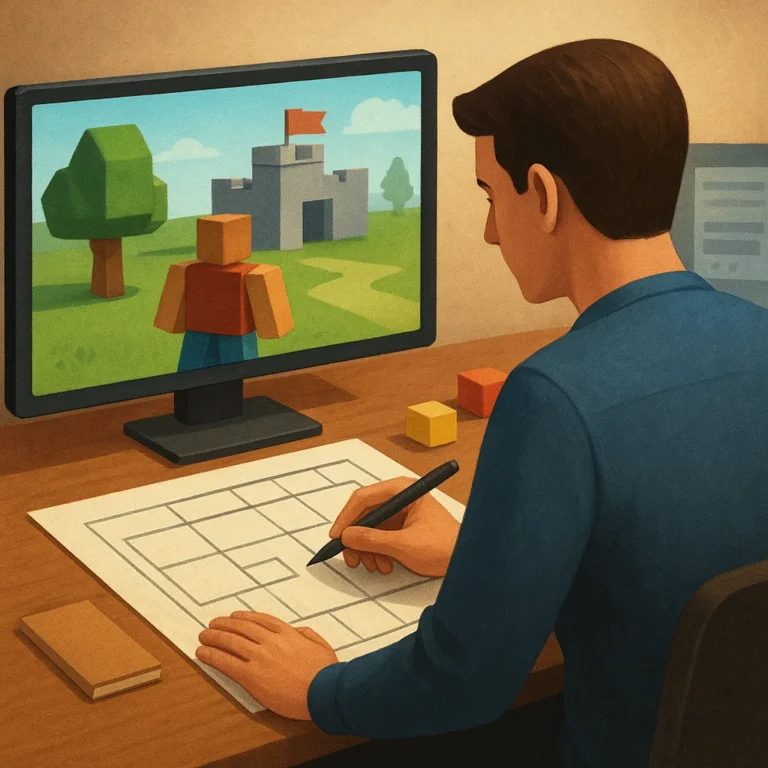
Map the opening path on paper with three simple beats: understand the setting, perform the core action, and receive feedback. Keep instructions near the decision they explain, and let players recover from a mistake quickly. A focused opening teaches through action, which is more memorable than a wall of text.
Build Progression Players Understand
Progression should make future play feel more interesting, not merely more expensive. Choose a few understandable milestones, such as new tactics, spaces, tools, or creative options. Each milestone should change what players can do or notice, while the path toward it remains visible enough that effort feels connected to a satisfying destination.
Set Meaningful Milestones
Set milestone spacing according to the attention your audience can realistically give. A short-session game may reward progress in minutes, while a deeper cooperative experience can use longer projects. Offer small signs of movement between major unlocks, but avoid filling every action with noise that makes important achievements feel ordinary.
Protect a Fair Pace
Protect players from frustration by explaining failure and offering a fair next step. Do not hide essential information behind repeated losses or demand long waits before meaningful choices appear. Difficulty can create pride when players understand the challenge, see their improvement, and believe another attempt might succeed through better decisions.
Plan Updates With Purpose
Plan updates around player needs rather than a calendar of random additions. Keep a living list of observed friction, promising experiments, and improvements to existing systems. Rank ideas by expected value and effort, then choose changes that strengthen the core promise before adding decoration, complexity, or extra monetization.
Treat each update as a conversation with the audience. Explain the problem you are addressing, show what changed, and watch how behavior responds. Small improvements to pacing, clarity, or social play can matter more than a crowded feature drop. Consistency builds trust because players recognize that feedback leads to useful action.
Test Before Building Big
Test the concept before investing in complex systems, polished art, or elaborate economy design. Build the smallest playable version that demonstrates the core promise, then place it in front of people who resemble your intended audience. Observe what they do without rescuing them too quickly, and record confusion as valuable evidence.
Run Small, Focused Tests
Run short tests with a clear question, such as whether players understand the goal or enjoy repeating the main action. Avoid leading them toward the answer. Ask what they expected, where they felt uncertain, and what they would change. Their language can reveal missing explanations that analytics alone cannot show.
Read Behavior Honestly
Compare what players say with what they actually do, then revise the plan deliberately. If the opening works but return play fades, improve variety or meaningful goals before adding rewards. When the promise, session, progression, and updates support one another, your Roblox game earns stronger foundations for lasting growth and responsible future monetization.