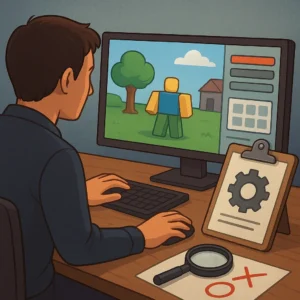
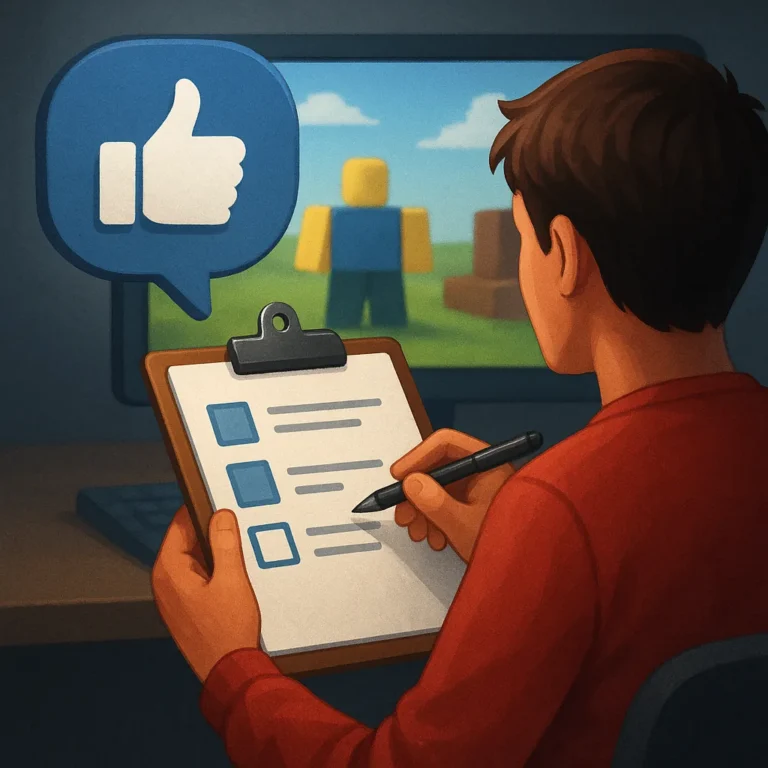
Player feedback gives Roblox creators a view of the experience they cannot get from their own testing. Players notice confusing objectives, slow menus, unfair moments, and delightful discoveries that a familiar developer may overlook. The goal is not to obey every request. It is to identify useful patterns, connect comments with evidence, and improve the game while protecting its identity.
An organized listening process turns scattered opinions into practical decisions. Start by inviting comments in places players already use, then ask for enough detail to reproduce a problem or understand its context. Record what happened, who encountered it, and how often it appears. This simple habit prevents the loudest individual opinion from becoming an accidental design brief.
Choose Feedback Channels That Fit the Game
Different games need different listening routes. A small cooperative project might learn most from an in-game prompt after a session, while a competitive experience may need a bug form, moderated community thread, or short survey. Keep each route easy to find and explain what information helps. Fewer useful channels usually beat a maze of neglected ones.
Tell players what feedback will influence before they spend time writing it. You can request reports about crashes, unclear objectives, pacing, accessibility, or balance, while noting which subjects are still fixed for the current release. A visible purpose improves response quality because people frame their comments around decisions the team can actually make.
Separate Bugs From Preference Differences
Listen for Evidence, Not Just Emotion
A frustrated message may describe a real failure, even when its wording is harsh. Ask what the player tried, what they expected, what appeared instead, and whether the outcome can be repeated. Screenshots, device details, session timing, and a clear reproduction path add value. Treat emotional language as a signal to investigate, not as proof by itself.
Build a lightweight record for each meaningful report. Include the original wording, feature involved, platform, frequency, severity, and any related clip or log. Avoid rewriting comments so heavily that their context disappears. A consistent record lets designers, scripters, and moderators compare reports without reopening the same investigation every time a concern returns.
Distinguish Defects From Preferences
Not every disagreement indicates a defect. One player may dislike a color, control scheme, or reward style that another group enjoys. Look for broken expectations, blocked progress, repeated confusion, or outcomes that contradict the game’s stated rules. Preferences can inspire experiments, but defects deserve faster attention when they prevent players from participating.
Group Recurring Concerns
Cluster reports by the player experience they describe rather than by the order they arrived. Several comments about a locked door, an unclear quest marker, and a missing reward may all point to one progression problem. Label clusters with plain language, link supporting reports, and note conflicting evidence. This turns a crowded inbox into a map of friction.
Count how often a concern appears, but do not treat repetition as the only measure. Players sometimes repeat a visible symptom while the underlying cause remains hidden. Compare reports across devices, skill levels, modes, and session lengths. Then write a short hypothesis, such as onboarding confusion or unreliable matchmaking, and test whether the cluster supports it.
Prioritize Changes by Player Impact
Rank possible fixes with a shared decision method. Consider how many players encounter the issue, how severely it harms play, how easy it is to verify, and whether a change supports the game’s main promise. A small accessibility adjustment may outrank a flashy feature when it removes a barrier for many people. Write down the reason for each choice.
Separate urgent repairs from valuable but optional improvements. A crash, exploit, or progress blocker can require immediate action, whereas a new cosmetic reward may wait for a planned update. Estimate effort honestly and include hidden costs such as regression testing, moderation, localization, or mobile performance. Priorities stay credible when the team explains both player value and implementation risk.
Test Improvements Before Committing
Use Small Experiments
When evidence is incomplete, change one meaningful variable at a time. Adjust a tutorial prompt, spawn rule, reward explanation, or camera setting for a limited audience, then compare behavior with a similar group. Define success before the test begins, using measures such as completion, retries, reports, or return sessions. A small experiment reduces guesswork.
Invite experienced players to test a candidate fix, but avoid making them responsible for the final decision. Their perspective can reveal edge cases, exploit paths, and confusing language that ordinary metrics miss. Keep test groups varied, record unintended effects, and remove the change quickly if it harms the core loop. Feedback should guide judgment, not replace it.
Share Progress With the Community
Communicate decisions with enough detail to earn trust. Tell the community which themes you heard, what you are changing, what needs more testing, and what will not change yet. Avoid promising a date before the work is understood. Clear boundaries show that feedback matters even when a specific request cannot be accepted.
Close the loop after release by revisiting the reports that shaped the update. Share a concise note about the fix, invite players to verify it, and watch for new problems created by the change. Thank contributors without implying special influence. Over time, this record builds a healthier relationship and makes future feedback more specific.