
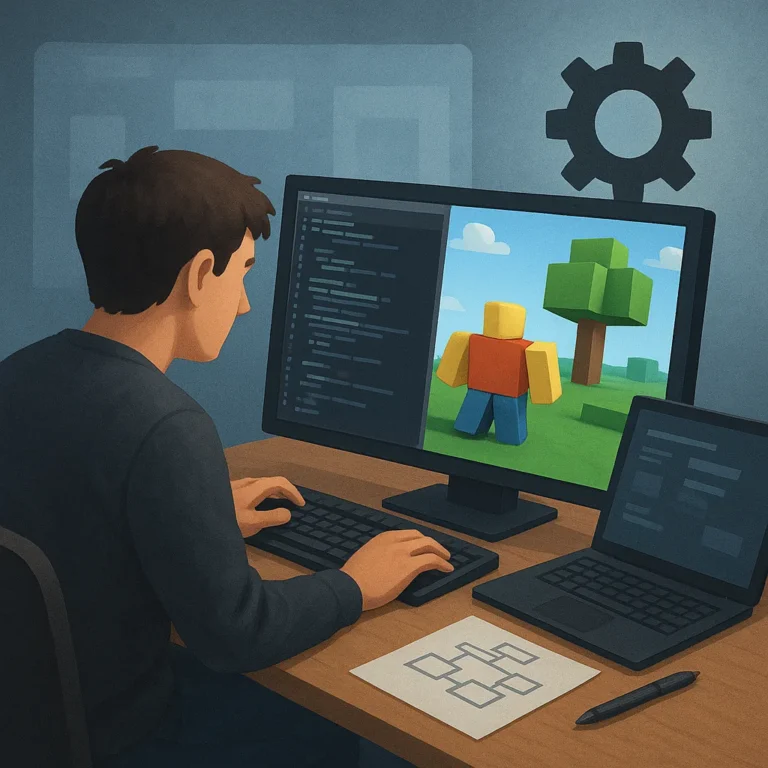
Building a Roblox game can look approachable until code, assets, players, and platform expectations collide. The difficult work is rarely one dramatic bug. It is a chain of small decisions about scope, testing, performance, feedback, and presentation. Understanding that reality helps creators pursue meaningful progress without expecting instant attention or rewards.
Creator rewards may motivate a project, but they should not replace a useful development plan. Start by choosing a manageable experience, identifying its main player action, and defining a testable first release. That approach turns ambition into evidence: you can observe what works, fix friction, and improve deliberately before adding complexity.
Recognize the First Technical Problems
Early projects often fail through issues: a remote event fires too often, a saved value resets, a collision behaves strangely, or a user interface works only on one screen size. Each problem can feel isolated, yet unclear ownership and missing reproduction steps make them harder. Write symptoms carefully before changing code.
Scope creates another technical challenge. A project that includes trading, combat, vehicles, procedural maps, and live events demands many systems before players can judge the idea. More features also create more interactions to test. Limit the first version to one satisfying loop, then add systems only when observations eventually justify them.
Use Simple Mechanics to Learn
Simple mechanics often expose core fundamentals without hiding them behind a large system. A short obstacle course, collection loop, or timing challenge lets you study input handling, state changes, camera behavior, and player feedback. When the foundation feels reliable, later features become experiments instead of desperate attempts to rescue weak design.
Choose mechanics that produce results quickly. If a player presses a button, moves an object, or completes a task, the game should communicate success clearly. Cause and effect helps you locate defects and understand enjoyment. It gives testers something concrete to discuss, rather than opinions about whether it feels fun.
Build a Testable First Loop
Test the first loop with a few players before building a progression system. Watch where they hesitate, repeat an action, ignore feedback, or leave the experience. Do not explain every step immediately; confusion can reveal design problems. Fix the clearest obstacle, retest, and preserve notes about what changed and why.
Protect Performance Before the Map Grows
Performance problems often arrive quietly. A map may run smoothly during solo testing, then slow down when several players, effects, and moving objects appear together. Measure before guessing. Check frame rate, memory use, network activity, and script timing under representative conditions. A baseline tells you whether a change actually helped.
Maps should support play rather than burden the device. Reduce unnecessary detail in distant areas, reuse assets, and avoid filling space with active objects. Consider how lighting, particles, physics, and animated elements combine. Optimization is not visual trimming; it protects responsiveness, which helps players understand controls and trust the experience.
Scripts deserve the restraint. Repeated work inside frequent events can multiply quickly, especially when every player or object runs it independently. Keep responsibilities clear, stop connections when they are no longer needed, and test on modest hardware. Small improvements in execution can prevent a feature from becoming a performance liability.
Debug One Variable at a Time
Debugging becomes manageable when you isolate one question at a time. Ask whether the event fired, whether the input arrived, whether the value changed, and whether the output reached the player. Log checkpoints instead of flooding the console. Each answer narrows the search and replaces guesswork with a repeatable investigation.
Reproduce failures under controlled conditions. Use the same place, account state, inputs, and sequence whenever possible. Change one variable, run the test again, and compare results. If a fix seems successful, repeat the original failure several times. Reliable debugging confirms causes, while a lucky success can hide the same defect.
Create a Distinct Player Experience
Standing out does not require copying a popular experience or chasing every trend. Identify a specific promise, such as cooperative discovery, thoughtful building, or unusually clear progression. Then make that promise visible through the opening minutes, interface, and recurring activities. Distinctiveness grows from consistent choices that serve a defined audience.
Make Rewards Support the Experience
Design for return visits by giving players a reason to continue, not by adding noise. Meaningful goals, readable progress, and fair challenges can create momentum. Ask what a newcomer understands after five minutes and what a returning player can master later. Retention begins with respect for attention, not pressure alone.
Use Documentation and Feedback Wisely
Documentation and tutorials are useful when they answer a precise question. Prefer official references for platform behavior, then compare examples with your project rather than pasting unfamiliar code. Community discussions can reveal alternatives, but verify claims in a test place. Learning becomes durable when you explain each change to yourself.
Feedback should broaden your view without replacing your judgment. Ask testers to describe actions, expectations, and moments of confusion instead of requesting a rating. Compare comments with play data and your goals. Then choose one improvement that fits the project’s direction. Consistent iteration builds credibility, skill, and meaningful creator opportunities.