
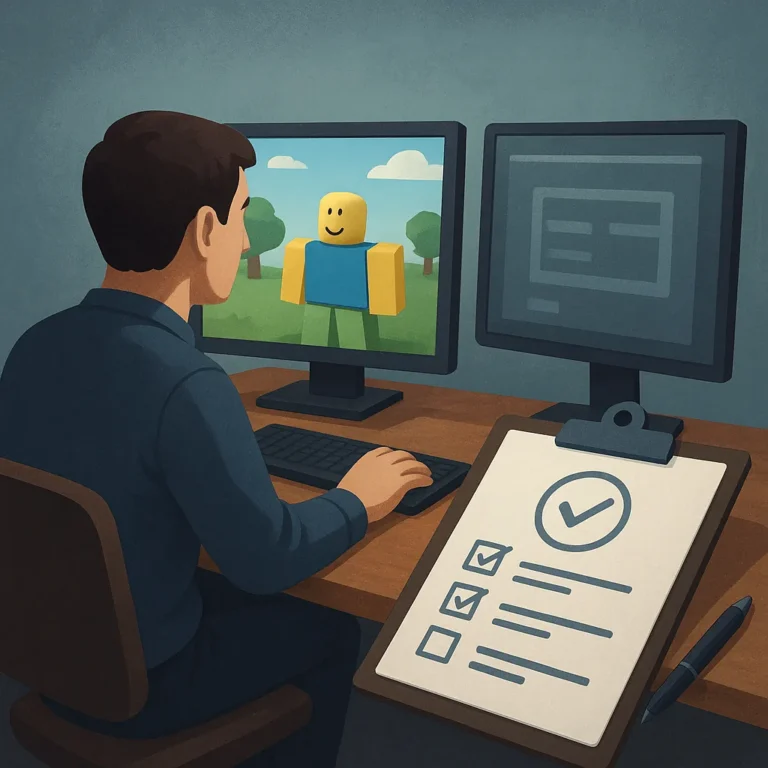
Improvement becomes easier when Roblox creators treat testing as a routine instead of an emergency. A small loop of building, checking, observing, and revising reveals problems while changes remain manageable. It also turns player reactions into guidance, helping each update serve the game rather than adding features without a purpose.
Use this process whether you are polishing a prototype or maintaining a popular experience. The goal is not to eliminate every surprise; it is to find the issues that block enjoyment, understand why they happen, and make decisions with evidence. A method keeps testing focused, affordable, and useful for release.
Test the Core Game Loop First
Begin with the action players should repeat often, such as exploring, solving, racing, or managing resources. Play that loop from start to finish without skipping steps. Check whether instructions appear at the right moment, controls respond consistently, rewards feel understandable, and the next goal is obvious after each action.
Test normal play before chasing edge cases. Follow the path a new player would take, then repeat it after making a mistake, leaving an area, or rejoining later. Watch for stalled progress, unclear prompts, unfair difficulty, and missing feedback. These basic checks often expose friction that impressive visuals can hide.
Invite a Small Group of Testers
Choose Testers With Different Habits
A tester group is more useful than a large crowd that offers vague reactions. Invite people with different experience levels: a curious newcomer, a regular Roblox player, and someone who enjoys the genre. Give them the same task, but avoid explaining every step, because independent decisions reveal where the design speaks poorly.
Share a testing brief that names the goal, starting point, and time limit. Ask testers to think aloud when they become confused, but do not lead them toward a preferred answer. Request screen recording or written notes only when practical. Boundaries make participation easier and produce observations you can compare.
Record Bugs and Confusing Moments
Capture Evidence, Not Just Opinions
During each session, record the moment a problem appears and what the player expected instead. Note the location, action, device, and result, then attach a reproduction path. A comment like confusing level is a starting signal, not a diagnosis. Specific evidence helps you separate a design flaw from a temporary mistake.
Keep a table with columns for issue, frequency, severity, evidence, and status. Add tester quotes when they reveal a misunderstanding, but translate each quote into an observable behavior. For example, record that three players missed a door after the prompt appeared, rather than labeling the door unintuitive. That distinction guides better fixes.
Prioritize High-Impact Issues
Prioritize issues by player impact, frequency, and repair cost. A blocker that prevents progress deserves attention before a minor visual inconsistency, even if the latter is easier to change. Give each issue an owner and a next action. This turns a long list into a queue that the team can finish.
Fix the Highest-Impact Issues
Change One Cause at a Time
When a problem has possible causes, change one factor before testing again. Adjust the prompt, timing, layout, or reward separately so the result remains readable. Large bundles of changes may create excitement, yet they make it difficult to know what helped. Controlled revisions protect your learning and reduce accidental regressions.
Fix the highest-impact cause, then run the scenario that exposed it. Confirm the failure is gone and check nearby systems for new trouble. If a change solves one complaint but harms the main loop, reconsider it. A successful fix should improve the measured experience without creating a larger cost elsewhere.
Repeat Testing After Major Changes
Retest after every major change, not only before a planned launch. New code, assets, rewards, or map paths can disturb systems that previously worked. Keep a regression checklist for saving, spawning, movement, purchases, progression, and multiplayer interaction. Run it consistently so checks do not depend on memory or mood.
Compare results across versions instead of relying on a session. Ask whether completion time, failure rate, confusion, or enjoyment changed after the update. Keep notes on stable results as well as what improved. Over time, this record shows which design choices help players and which fixes merely move the problem.
Turn Feedback Into the Next Plan
After a test cycle, summarize three things: the improvement, the remaining risk, and the next experiment. Share that summary with collaborators so everyone understands why work continues or stops. This habit prevents feedback from disappearing inside chat messages and gives each release a clear learning objective beyond adding more content.
Keep the loop simple enough to repeat when your project grows. Schedule focused sessions, preserve evidence, fix high-impact friction, and return to the core journey after each major update. Consistent testing will not guarantee success, but it builds confidence, protects player trust, and helps your Roblox experience improve with purpose.